


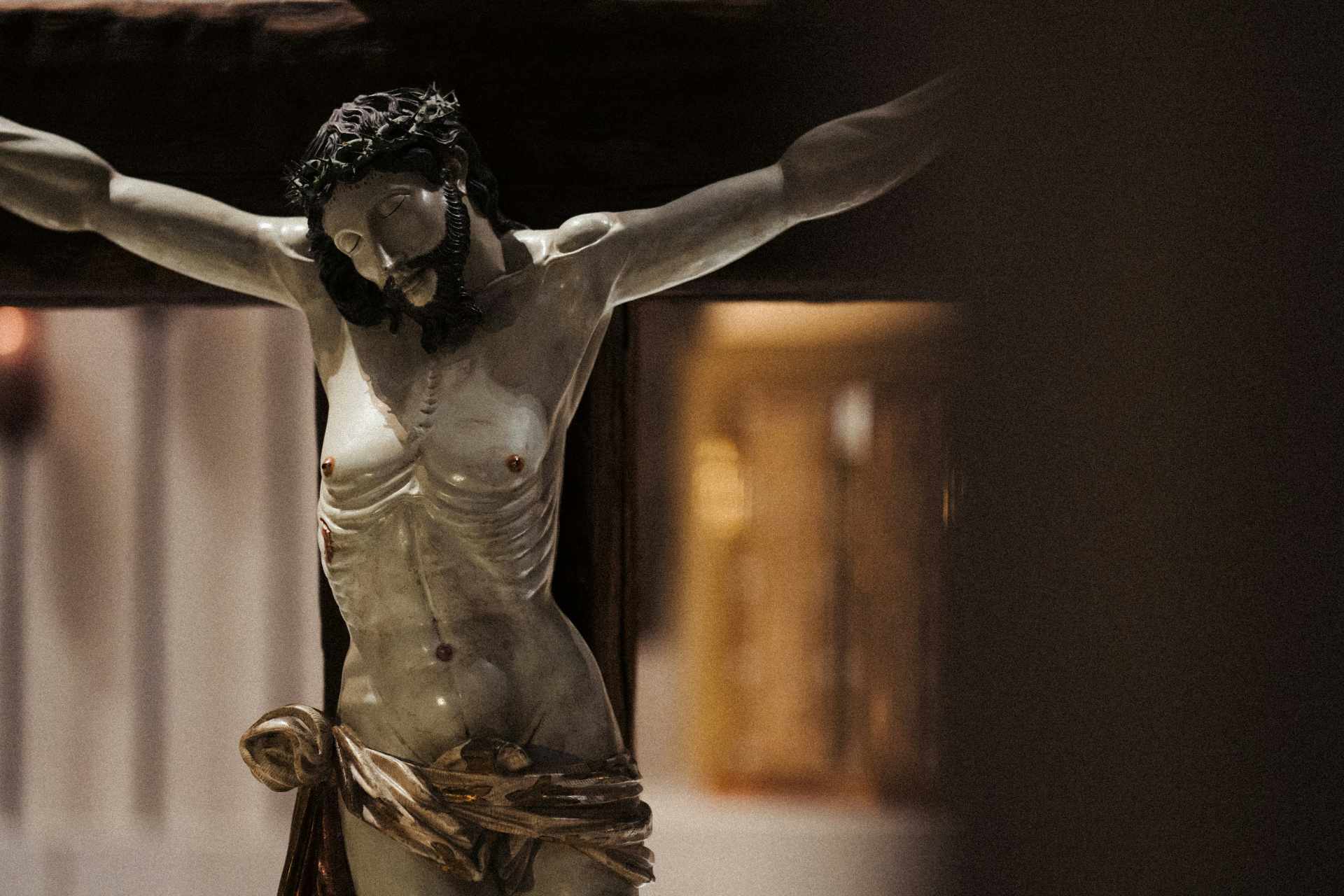
I fell in love with the Anima Christi prayer the first time I heard it. The words of the prayer marched in step with the yearnings of my own tattered heart. My breath caught in my throat when I prayed “within your wounds, hide me,” and my soul, bruised and beaten, found its refuge in Christ’s wounds. Since that time, Jesus’ wounds have been where I encounter him most intimately. I picture myself as a tiny child curled up and tucked into one of his wounds, held between folds of skin and bathed in his holy Blood. At the same time, I express my desire that my presence be a balm to him as well, bringing some comfort to his Heart. This imagery helps me to bring my wounds consciously into Christ’s presence. There, they become places where I meet him, not just places of pain.
Wounds Affect Our Relationship with God
Created by God as his sons and daughters and made in his image and likeness, we are invited to share in his gift of love. Even if we don’t fully realize it, our greatest longing is for communion with God, who is an eternal exchange of love, Father, Son, and Holy Spirit (CCC 221). We deeply desire to be known, understood, and delighted in, both by others and by God.
Despite this longing, however, we so often experience the opposite in our relationships. Anger and resentment, pride and envy, misunderstanding and assumption inflict pain. Even when intentions are good, we are often blind to the deep needs of others. We rush to complete our tasks rather than really seeing another person’s suffering, or we pass judgment and condemnation rather than seeking to understand. Wounds can then develop and take root.
We may unconsciously accept lies that are spoken openly or whispered in the recesses of our mind, only to realize later that they have been festering beneath the surface. Feeling alone or disregarded as we carry this burden only intensifies the pain. In response, we often put up protective walls to try to prevent further injury. We may develop a distrust of others or struggle to trust even God. Or we might cut ourselves off from our emotions or from our own hearts or even deny our innate dignity as children of God.
This pain can make it very difficult to pray. Wounds sustained in relationship with others can also affect our relationship with God, and we may push him away at the time we need him most.
God Desires Our Wholeness
I have found it most effective to work on healing at a human level while, at the same time, engaging more deeply in prayer, asking God to help and guide me through everything. Both participating in counseling and sharing our story with a trusted friend allow us to experience our pain and process our wounds within the safety of relationship.
From a Christian perspective, the ultimate aim of both prayer and healing is the same and matches God’s desire for us, his children: wholeness in him and communion with the holy Trinity—reflecting God’s image and likeness and becoming more fully ourselves. In this sense, the goal of healing is the transformation of our heart and a sharing in God’s life. It is about dying to self so that we can rise with Christ. Our Lord took on our humanity and suffered so that we may unite our suffering with his. He desires to live in us and through us, cleansing and purifying us so that we may also shine with the light he gives to us. As God speaks the truth of who we are into our heart and as we live in our identity as children of the Father, his love begins to wash away the wounds and lies.
I am continually amazed at the way God works in us through our suffering and woundedness. The very thing that threatens to pull us under is exactly what God uses to invite us to draw closer to him and lift us up to a greater height. The cross is inseparable from the Resurrection. Similarly, Christ redeems our suffering and uses it to restore us. What Joseph told his brothers, we can also say: what the enemy meant for harm, God has used for good (Gn 50:20).
Four Ways to Pray with Your Wounds
While all this is true, I have found that it is difficult to engage in prayer with God when I am hurting. God resides in the deep places of our heart—the places that we may have closed off in our woundedness. When our goal is to avoid the pain that lives in those same spaces, prayer becomes challenging. We may become restless and unable to sit still. Our mind might wander to safer territory or be unable to focus. Breaking through this block takes courage, persistence, and grace.
Here are four ways of praying that I have found helpful:
1. For me, the key to beginning to pray from the place of my woundedness has been this: I must be willing to bring my whole self to God. As the Catechism of the Catholic Church states, “Whether prayer is expressed in words or gestures, it is the whole man who prays” (CCC 2562). Whereas we can become fragmented in woundedness, praying with our whole self can begin the process of reintegration. Our bodies and souls are meant to pray and praise God together as one. In the same way, “The need to involve the senses in interior prayer corresponds to a requirement of our human nature. We are body and spirit, and we experience the need to translate our feelings externally” (CCC 2702). I find it a great help to express my prayers aloud, letting my heart cry out to God through my body. I especially love praying in an empty church, where Jesus is present and available for me, body and soul, in the tabernacle or monstrance. When I am alone with him, I can pray aloud and speak honestly with him about my pain and concerns, then listen for his answer.
2. Meditation is a powerful method of prayer which reintegrates our bodies and souls with our thoughts and emotions, imagination and desires, in order to come to wholeness in Christ. “Meditation engages thought, imagination, emotion, and desire. This mobilization of faculties is necessary in order to deepen our convictions of faith, prompt the conversion of our heart, and strengthen our will to follow Christ” (CCC 2708). When we meditate, we honestly share with our Lord the feelings and longings we have hidden away. We can examine our thoughts and beliefs in the light of God’s truth and “take them captive,” as St. Paul says (2 Cor 10:5). We can lay our pain at the foot of the cross (Jn 19:25) or sit at the well with Jesus as he looks with compassion into our hearts (Jn 4:17-18). As we feel and work through pain and sorrow in the safety of his arms, our suffering quietly gives way to conversion and redemption.
3. Meditating on what we read in Scripture, writings of the saints, and other religious sources “helps us to make it our own by confronting it with ourselves. Here, another book is opened: the book of life. We pass from thoughts to reality” (CCC 2706). I have found that confronting my life with God’s Word has greatly challenged me to look at my life and my wounds in the light of Christ, to understand God’s ways more deeply, and to know him more intimately. Rather than sitting in my own self-absorbed shell, the Word has cracked my heart open again and again to reveal something new—something intense in a different way, overwhelming in its beauty.
4. Finally, it is when we meditate on Christ’s Passion and his wounds, as well as on our own suffering and woundedness in relation to his, that our prayer becomes deepest. Through receiving our Lord, given for us, and offering ourselves and our suffering in return, our wounds become a place of encounter with Christ. This exchange of hearts and sacrificial love—a communion our Lord made possible by giving himself to us—brings about breathtaking intimacy and, paradoxically, joy as we share in his mystery. In this safe and life-giving space, we can “let our masks fall and turn our hearts…to the Lord who loves us, so as to hand ourselves over to him as an offering to be purified and transformed” (CCC 2711), made more completely into his likeness and prepared to receive him more deeply into our hearts and our lives.
Kimberly Andrich is a wife and mother of five. She writes from the perspective of having a hidden, chronic illness and experiencing a deep, continuous conversion through being yoked to Jesus in the day-to-day trials and joys of life. You can find more of her work at fallingonhisgrace.substack.com.
Image by G + L from unsplash.com


