


I have been watching clips of Pope Leo’s visit to France, and I keep finding myself in tears.
Not tears of sadness. Something else.
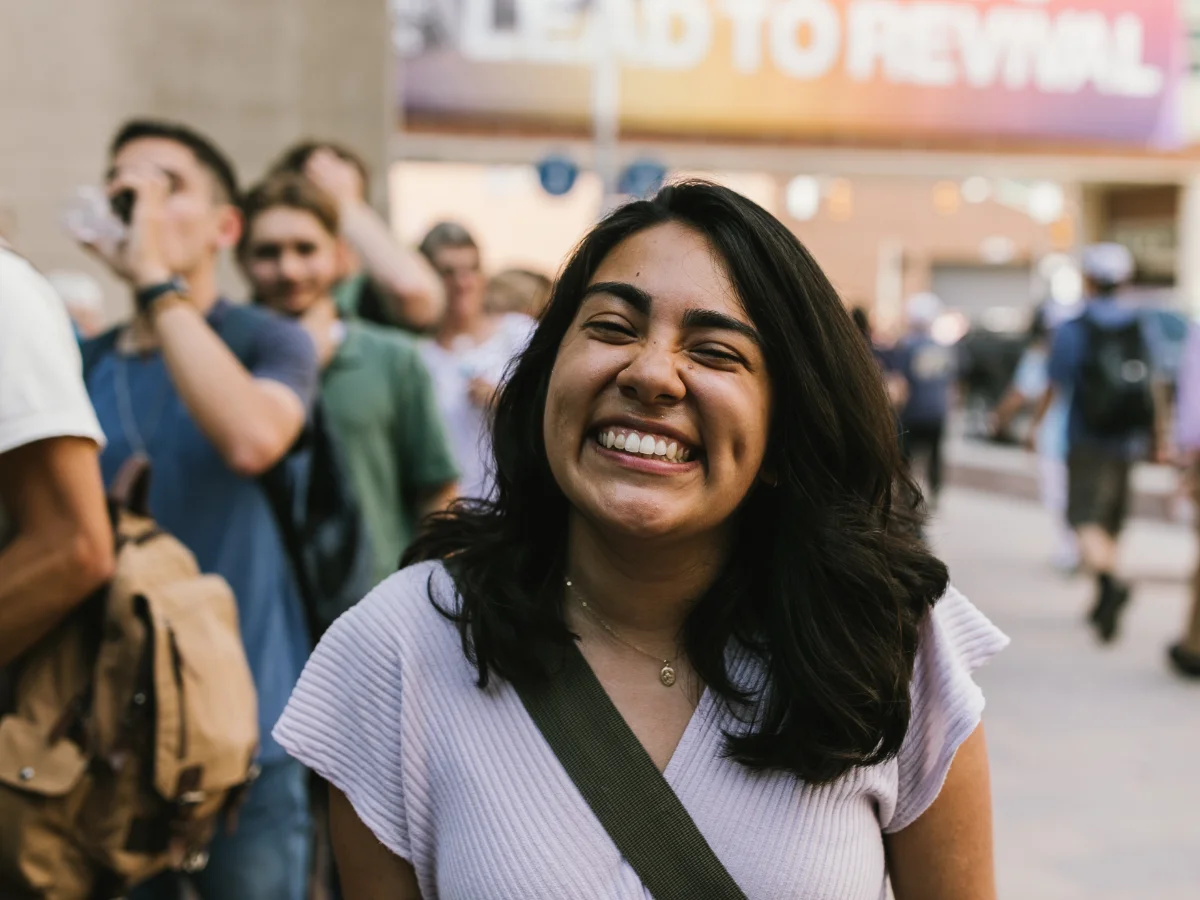
Something in these gatherings touches me deeply. People are coming together and finding each other. They are gathering in the open. They are singing, smiling, listening, praying, looking at one another—and perhaps discovering that there is still so much life among us, a deep life, the Fountain of Life that slakes our thirst and makes us flourish.
Five days of hope played out in France and before a watching world: “The light that guides us and draws us onward is the light of hope,” Pope Leo encouraged us. This hope “never abandons us even as we journey through this life — a life often marked by trials, yet already filled with the joy of knowing ourselves to be children of God, loved and saved by Jesus” (Address at Lourdes, September 27, 2026).
Matteo Matzuzzi called Europe an “unpredictable mission field,” which Pope Leo understands and is moving to the center of our attention—it is a new periphery, a place for renewed evangelization, a place where what has become a tiny flicker can burst into flame one again. Europe, where in the last century the transmission of the faith had been interrupted and where secularization was advancing rapidly, is somehow also the soil from which God is raising up unexpected harvests of faith right before our eyes. Leo said at Rimini in August: "Let there not be only those who fan the flames of weariness and despair; let there also be those who rekindle dreams and visions!"
The Joy of the Young People Was Everywhere
Pope Leo seemed to really enjoy being with the 80,000 young people packed into the “Stade de France” of Saint-Denis on September 25. The joy and exuberance was everywhere. I wondered what was in his heart that evening as he looked out over the “new saints of France”? Something powerful was erupting from within them, a flood of promise that could not be stopped. And as he held in his hands their eager desires for a future built on God, he was unafraid of opening to them the heart of Christ, their refuge in a world that is fragile and suffering: “It is true, as you say, that the society in which we live seems indifferent to God. But the Lord is not indifferent to us! This is what matters, and what always gives us hope.”
And he pointed them to the Eucharist:
“It is from this sacrament [the Eucharist], which sustains our faith, that we, in turn, draw strength to give ourselves to our neighbor, imitating the selfless love of the Lord Jesus. The pursuit of justice and peace compels us to acknowledge the conflicts we experience within ourselves and to purify our hearts. By committing ourselves to the service of God and others, our wounds then find consolation and redemption. Throughout the history of the world, there is no failure from which God cannot lift us up, for his mercy is our joy.”
The Joy of Coming Together
Perhaps this is part of the art of living: to come out into the light and allow ourselves to see one another again. To pray together. To adore, and surrender, and intercede, and desire together. To receive the Body and Blood of Christ in the Eucharist together. To listen to the Word together.
And we are discovering that there is joy in this.
Pope Leo seems to understand something about this. He does not remain in Rome. He goes out. He visits people where they are. He puts himself among them. And again and again, people gather, the world listens, the world is moved by what it sees, and something changes.
There is something profoundly human about gathering.
We need to see one another's faces. We need to hear one another's voices. We need to laugh and sing together. We need occasions when we can stop watching the world through a screen and discover that the person beside us is real, and that we ourselves are still capable of joy. That we are still capable of Christ-like love for our neighbor.
“Remember this principle,” the pope said, “the good gives life; it never takes it away. The good cares for others; it does not take for itself. The good is not simply a nice idea, but the radiant face of love: it is God himself…. Our battle is not a battle against others. It does not employ the weapons of violence, contempt or oppression. Our only weapon is that of self-giving love…. When we feel surrounded by their darkness, the light of the Holy Spirit enlightens us and comforts us. And so, tonight, let us choose together the virtues we must cultivate in order to follow the Lord” (Prayer Vigil with Young People, September 25, 2026).
Allowing Ourselves to Be Found by Joy
Maybe this is one of the simplest arts of living: to allow ourselves to be found by what is true, good, and beautiful—and then to turn toward one another and share the joy of having found it.
“Indeed, our prayer and listening together to the Scriptures enable us to see the events of history in the light of God, making us more aware of our responsibilities, allowing us to unmask unjust relations of power and sow the seeds of justice and peace. It is hope that drives us therefore, not resignation. And from this arise bonds of greater fraternity and networks of solidarity, the fruit of communion in the one Sacrifice of Christ” (Message at Vespers, September 25, 2026).
As I watched the clips of Pope Leo’s visit to France, I remembered the day Pope John Paul II was elected, and his apostolic journeys throughout the world which coincided with my first years in religious life. These worldwide gatherings with John Paul II were amazing. They were an amazing way in the age of the media for the Pope to be among his people and stand as a teacher before the world. At the Mass celebrated by John Paul II on Boston Common in October 1979, I felt that he was teaching the world. We had the front seats because we were there along with thousands of others, of course, but no doubt everyone was quietly listening, even in the halls of power where decisions are made that affect millions of lives.
Discovering Again a Joy We Didn’t Remember Was There
Watching Pope Leo, however, I think of closeness. He comes near. He touches the sick. He prays. He cares. He comes to gather his flock together so that—spending time together—they discover who they are, the treasure they have, and their vocation for the sake of the world. They see each other’s faces. They experience a joy in their hearts that perhaps they didn’t remember was there. They know the strength of inner resolve and missionary commitment that enlivens them and gives them purpose. But most importantly, Pope Leo brings them together to pray, to listen to the Word, to receive the Eucharist, to discover anew the Font of life and hope and joy that will remain with them long after he leaves to return to Rome.
He reminds them—and us—that the follower of Christ is called to remind a world surrendering to secularization that it “has a soul.”
The Joy in the Eucharist and the Joy We Share with Each Other
In his homilies in France, the pope connected the dots between the joy we find in the Eucharist and the joy we share, a joy that then brings about peace in the world, the peace of the “heavenly city.”
“Today’s Liturgy of the Word invites us to look into our hearts and ask, what is my deepest thirst? What am I really seeking in life? We all long for happiness, love and fulfilment. But from what source do we seek to quench our thirst? Are we content with material goods, immediate satisfactions, the countless little idols that promise us everything but leave our hearts empty? We have been baptized and received the living water of which the Gospel speaks, but have we truly encountered Christ personally? In essence, the human person is a being of desire, and only God can fill the emptiness within us” (Homily, September 26, 2026).
And at the Mass on September 27, Pope Leo mapped out in his homily how the love we learn together at the Eucharist, in prayer, in shared gathering, becomes the love that will transform the world. “It takes strength and great integrity not to be overwhelmed by evil, especially when the wounds inflicted are deep. However, in the face of injustice, humanity’s only path to salvation is a love that cares for others and seeks to give trust regardless of the circumstances, even when confronted with the most difficult behavior to accept (cf. Mt 5:42). Thus, law, justice and peace are stages on a path of conversion that begins as a personal journey and becomes increasingly communal, leading to a civilization that respects human beings and their Creator. It is no coincidence that Saint Augustine defined the peace of the heavenly city as a harmonious communion in which people find joy in God and in one another through him (cf. De Civitate Dei, XIX, 13,1). He also described peace among people as the fruit of a tranquillitas ordinis, whereby each person recognizes and respects the unique and sacred dignity and role of others” (Homily, September 28, 2026).
Pope Leo is confident that “the wounds of the past become openings through which light shines.” I have always been drawn to the stained-glass windows in churches. He drew attention to them in Saint Stephen’s Cathedral in Metz, calling them “‘books’ that bring us together to remember wonderful stories full of heroism, goodness, mercy, love and moral beauty, to which we, in turn, must be generous and courageous witnesses.”
Perhaps that is the most important thing to take away. We experience in the apostolic journeys of Pope Leo XIV—even if we are watching from far away—the joy of his fatherly support and encouragement, his guidance and the way he gathers all around Jesus in the Eucharist. We, then, are filled with energy to be generous and courageous witnesses of love, peace, and respect, building up the kingdom of God in the world around us.
Sr. Kathryn J. Hermes is a Daughter of St. Paul and serves as the editor of Heart of the Revival. She is an author, speaker, and editor for Pauline Books and Media. She can be found at touchingthesunrise.com.


