


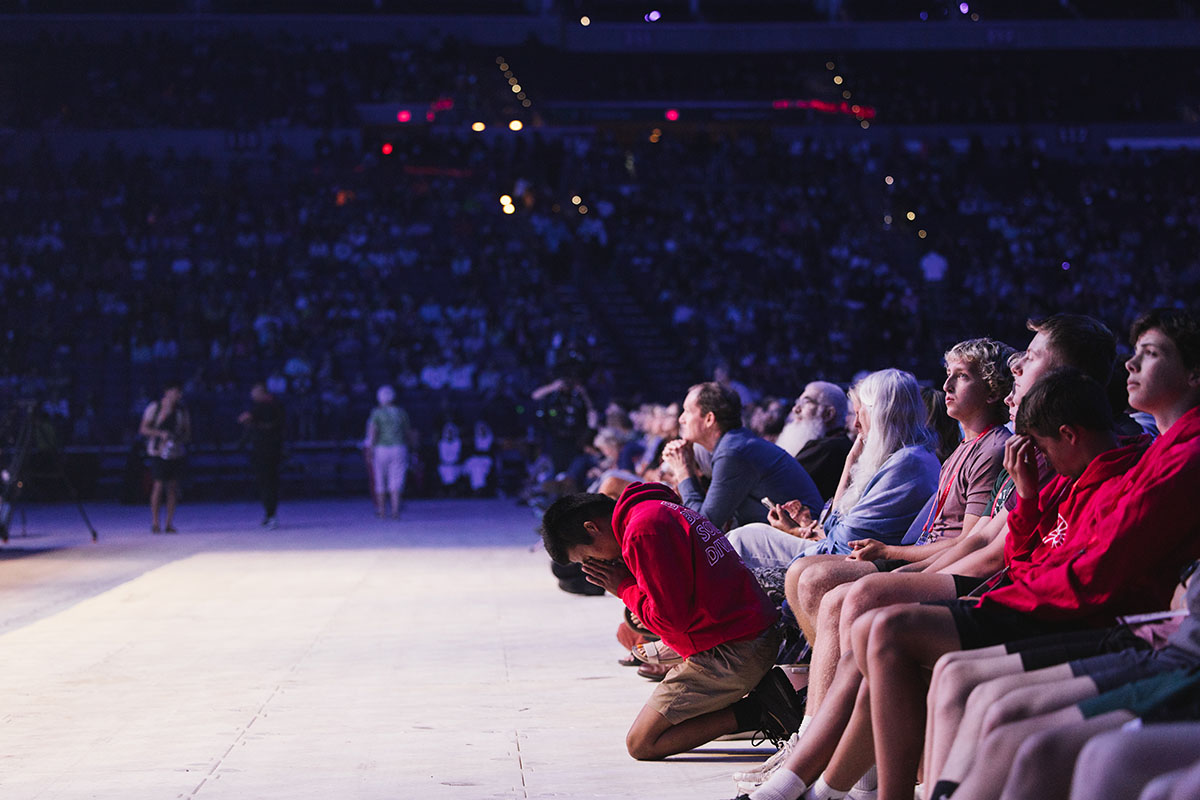
In 2026, as part of America’s 250th anniversary, we will embark on the One Nation Under God Eucharistic Pilgrimage that will trace a 2,000-mile route from St. Augustine, Florida–site of one of the first Masses which initiated an unbroken Eucharistic and parish life that continues to the present day–to Philadelphia, where the nation’s founding vision was articulated. Beginning on Pentecost Sunday and culminating over the Fourth of July, the pilgrimage will move through cities and small towns, immigrant communities and historic sites, places of beauty and places marked by pain.
The theme for this 2026 Eucharistic Pilgrimage has been chosen since last year, long before others were planning their own events for the nation’s anniversary. It is us acknowledging we are a pilgrim people. It celebrates the gifts and blessings of the past 250+ years of Catholicism in the United States of America, but at the same time, recalls that we are a country on pilgrimage, always striving to be in service to God and to others.
The most significant aspect of this Eucharistic pilgrimage is that we once again place ourselves under our Lord in humility–asking for healing, unity, and continued renewal.
We chose the theme One Nation Under God because of its historical Catholic roots, particularly as the words “under God” came to be included in the Pledge of Allegiance. They are familiar words, often recited without much thought. Yet they carry a weight far greater than a slogan or a political claim. Properly understood, they are a confession of humility.
The phrase “under God” did not appear in the original Pledge of Allegiance, and in our national history could be considered more of a recent addition. In 1954, in the aftermath of two World Wars and the rise of the Cold War, the words “under God” were formally added to the Pledge of Allegiance by President Dwight D. Eisenhower through the efforts and advocacy of the Knights of Columbus, who argued that freedom itself requires acknowledgment of a higher moral authority than the state. Without such acknowledgment, rights become fragile, subject to ideology, force, or convenience. This two-word addition by the Knights in their chapter meetings became codified and taught in classrooms all over the United States.
“Under God” hearkens back to a phrase in the Declaration of Independence: “endowed by their Creator.” To take the divine out of any civic society will lead to truth defined by the majority, or worse, by might. You also see it in Abraham Lincoln’s Gettysburg Address. Speaking in the shadow of unimaginable loss, Lincoln described a nation that might yet experience “a new birth of freedom”—a freedom that would endure under God.
And individually as well, we too, humble ourselves to our God–a personal and triune God who loves, protects, sustains, and guides. We ask him to reign in our lives, and we seek to do his will. You can see us as Catholics, every time we come to Mass, before entering our pews, genuflecting as if to say: “You are God, and I am not.” It is a posture of humility, docility, and right ordering of self. It is us, at every Mass, yielding to the divine and putting ourselves “under God.”
To say a nation exists under God is to say that the power of the state is not ultimate, and that the will of the majority is not the final measure of truth. It is an acknowledgment that human dignity precedes government, that rights are received rather than granted, and that freedom can only endure when it recognizes moral limits it did not invent. It is an acknowledgement of our grateful hearts as individuals and as a country for all that he has given and for his many blessings. President George Washington, in his 1789 Thanksgiving Proclamation, established a day of public thanksgiving in awareness that the benefits we had received were “favors of Almighty God.” This proclamation expresses a nation’s call to live under God:
“Whereas it is the duty of all Nations to acknowledge the providence of Almighty God, to obey his will, to be grateful for his benefits, and humbly to implore his protection and favor–and…that we may then all unite in rendering unto him our sincere and humble thanks–for his kind care and protection of the People of this Country…
and also that we may then unite in most humbly offering our prayers and supplications to the great Lord and Ruler of Nations and beseech him to pardon our national and other transgressions—to enable us all, whether in public or private stations, to perform our several and relative duties properly…” (George Washington, 1789 Thanksgiving Proclamation, October 3, 1789).
Married for twenty-one years, father of five, convert, Jason serves as the President of the National Eucharistic Congress.


